
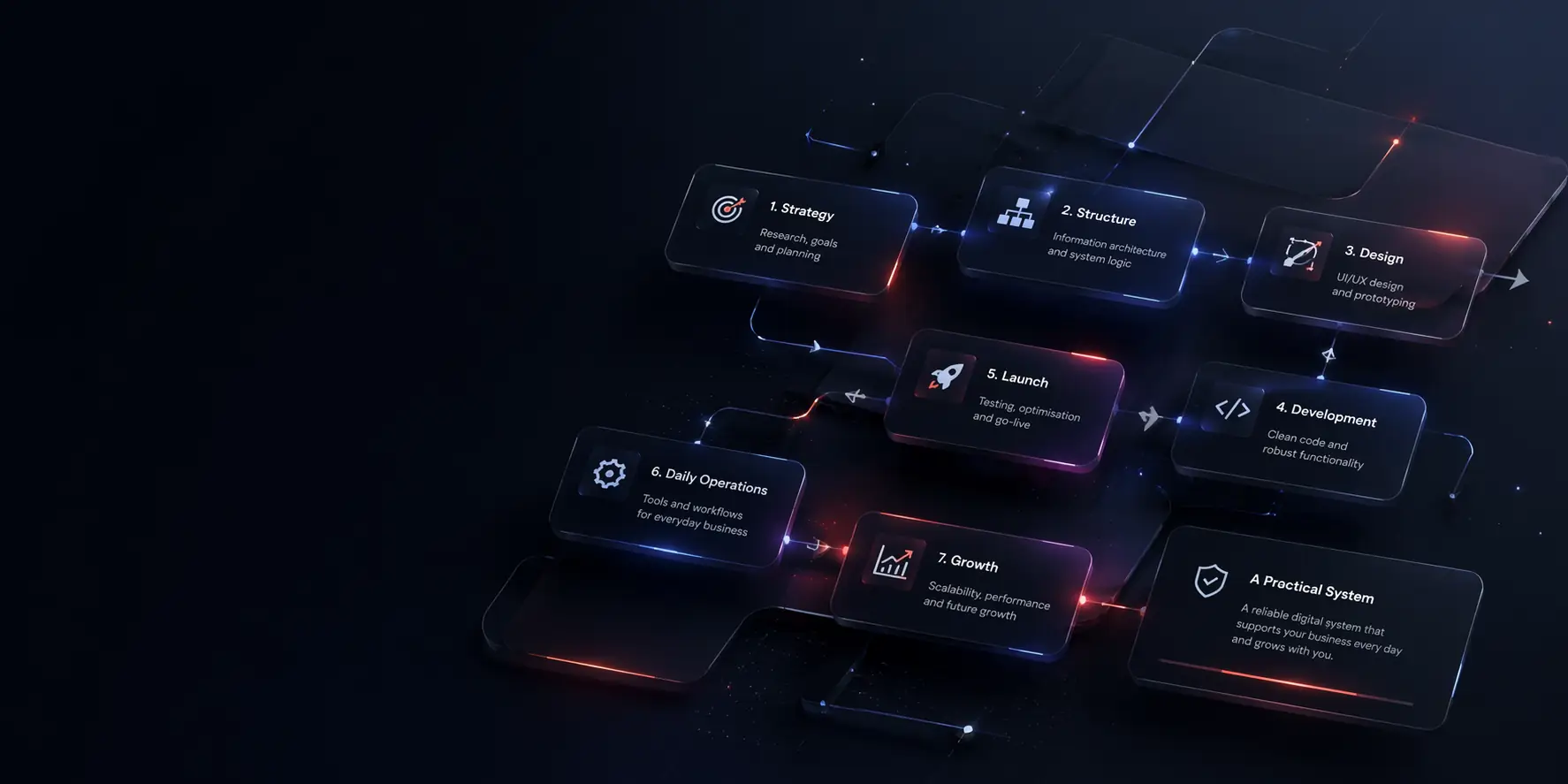
Our Process
Our process is built around one goal: not simply to launch a website, but to create a practical system that supports everyday business work and future growth.
Whether the project is a corporate website, an eCommerce website, a marketplace workflow, or a product listing system, we begin by understanding the business properly. We analyse the market, review competitors, define structure, build the right user journey, and shape a solution that helps the client operate more effectively and compete more strongly.
We do not aim to make our clients look merely similar to the strongest players in their market. We aim to help them build something clearer, more useful, more efficient, and in many cases more advanced than what competitors already have.
Why Our Process Starts with Analysis
Every new client project begins with analysis.
Before structure, design, development, or content work starts, we study:
- The business direction
- The type of products or services
- The target market
- The competitors
- The current strengths and weaknesses in the niche
- The client's real goals
This applies whether the business sells new goods, used goods, services, or technical products. It also applies whether the client plans to sell through their own website, eBay, Ovoko, or other marketplaces.
The reason is simple: a strong project cannot be built on assumptions. It needs to be based on a clear understanding of the market and what the final system must do better than the alternatives.
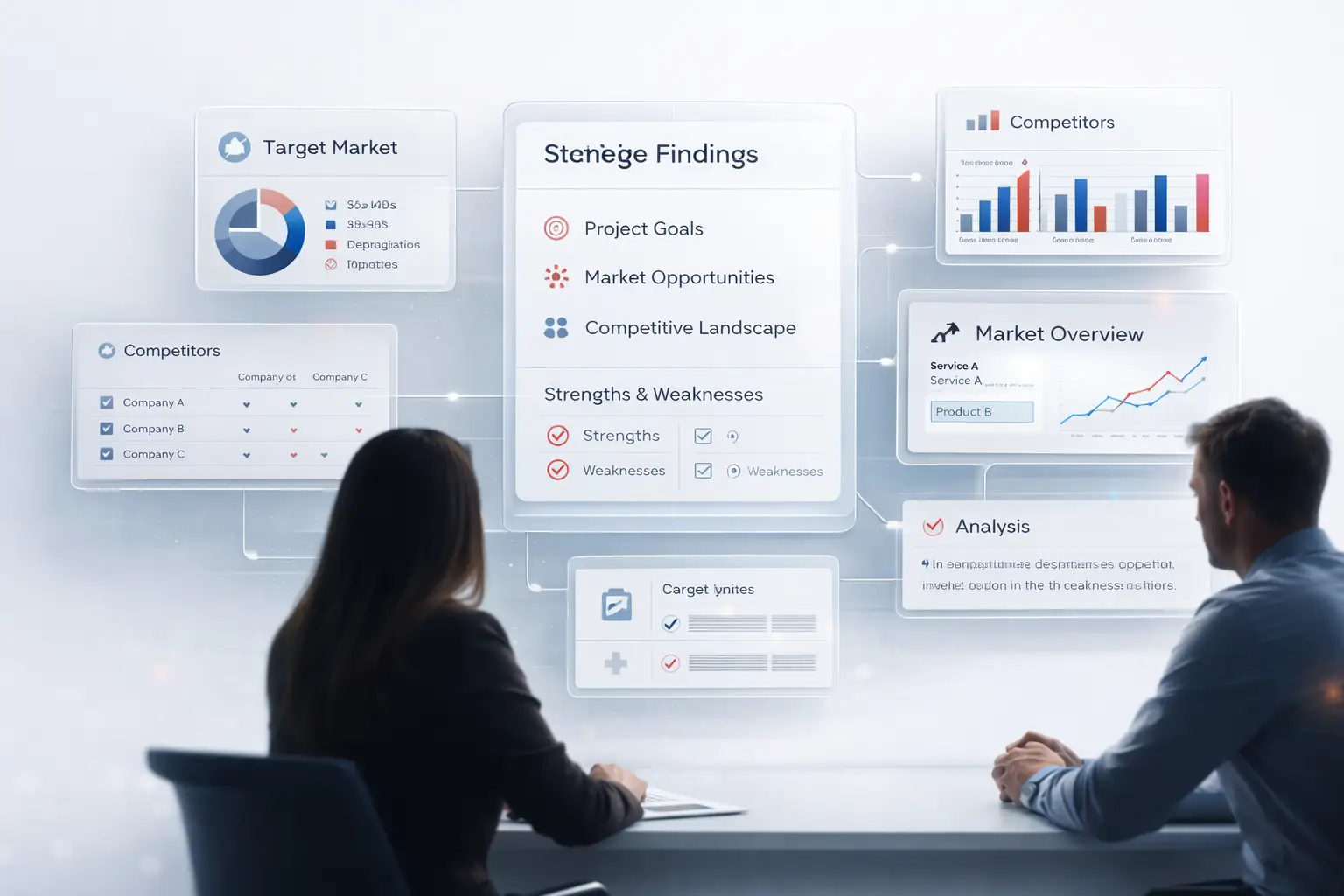
Competitor Analysis and Business Direction
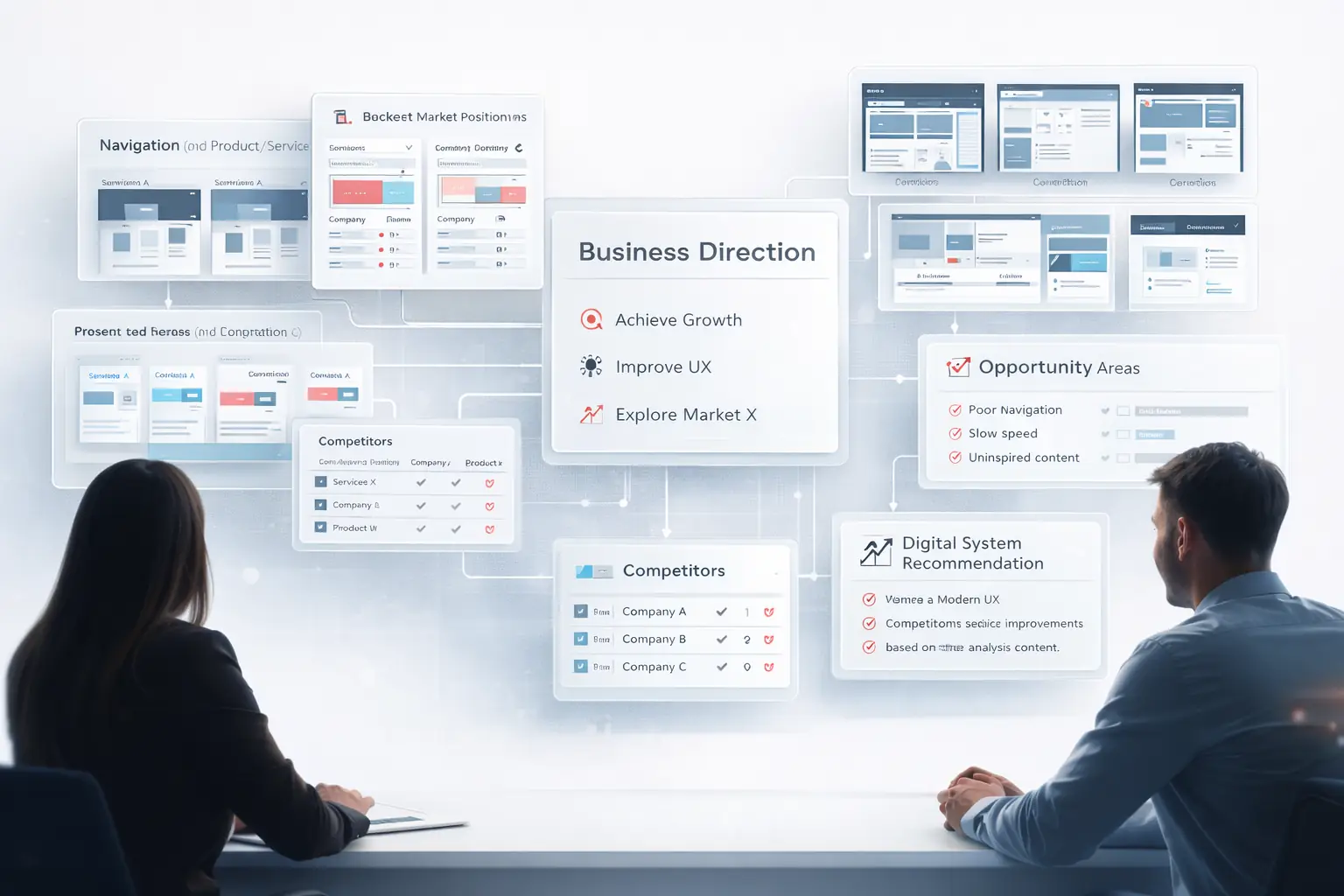
The first stage of our process is research. We analyse competitors, study the client's business activity, and review how similar companies present themselves online. We look at their structure, content, navigation, functionality, product presentation, marketplace positioning, and areas where they are either strong or weak.
This allows us to define:
- What the client wants to achieve
- Which direction the business should take online
- Which competitor approaches are worth studying
- Which weaknesses in the market can be improved
- What kind of digital system should be built to create a stronger result
The goal is not to copy competitors. The goal is to understand the landscape well enough to build something that performs at the level of strong competitors — or better.
Structure, Hierarchy and Usability Planning
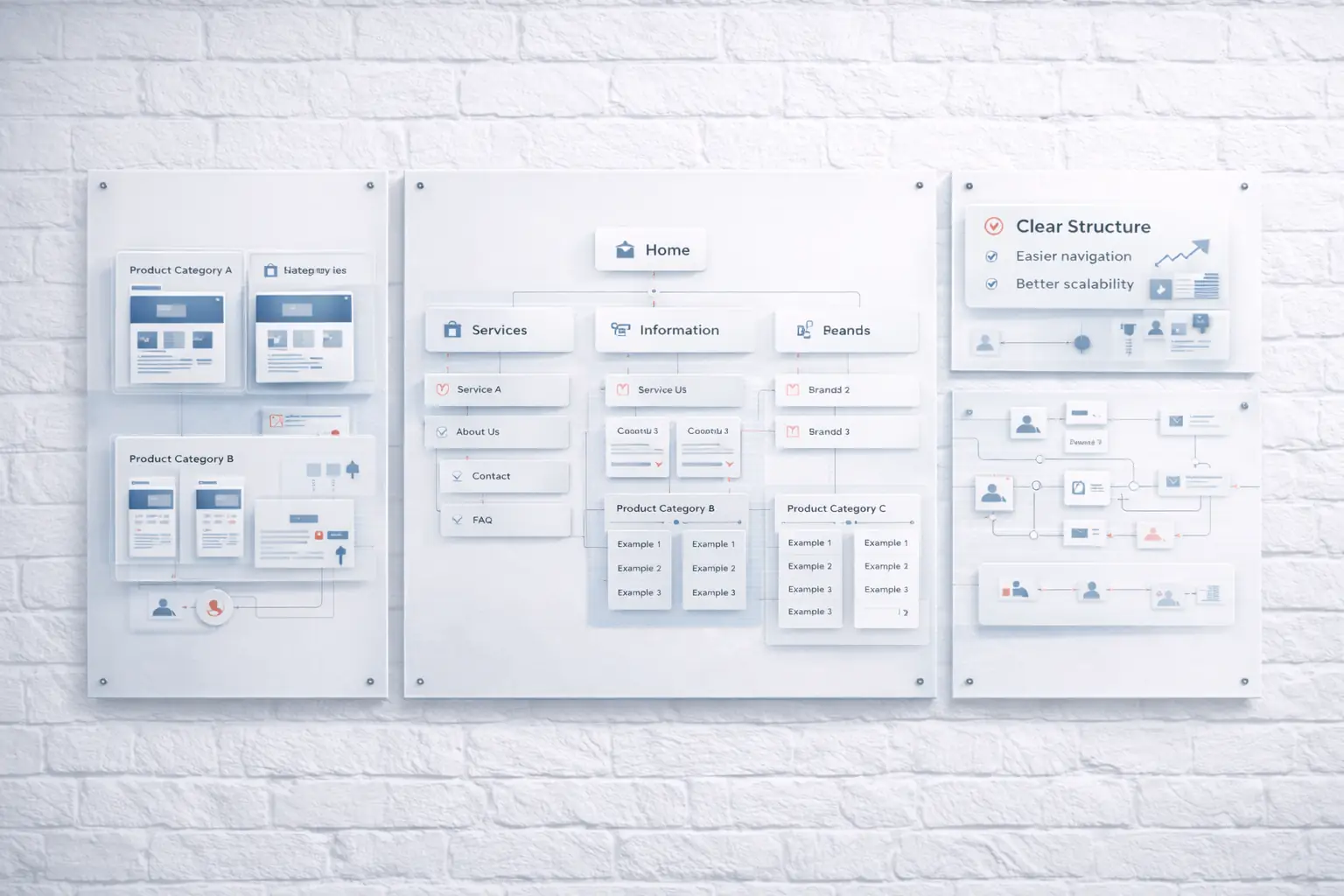
Once the analysis stage is complete, we define the structure of the project. This includes:
- The page hierarchy
- The category structure
- Information pages
- Brand pages
- Product groupings
- The overall user journey
This stage is especially important because structure influences how the website works for both users and search engines. If the structure is weak, users struggle to find information and the site becomes harder to scale. If the structure is clear, the website becomes easier to navigate, easier to expand, and better prepared for visibility and long-term growth.
Usability is a key part of this stage. For a corporate website, that means helping visitors quickly understand the company, its services, and how to contact it. For an eCommerce project, it means helping users find products, understand categories, move through product pages, and complete their actions more easily.
Choosing the Right Build Path
At this stage, we decide how the project will be built based on the client's goals, timeline, and scope.
Fast Start on a Ready-Made Theme
If the client wants a faster launch, we can develop the project on a ready-made structure or template and adapt it to the agreed business needs.
Custom Development from Scratch
If the client needs a more individual result, we move into a full custom process. This includes:
- Site structure discussion
- Design direction
- Colour scheme
- Page-level planning
- Functionality decisions
For custom projects, we prepare designs for the approved pages. Depending on the commercial proposal, this can include: homepage, category pages, product pages, checkout, 404 page, and supporting information pages.
The design stage is created across multiple screen formats so the client understands in advance how the project will work on different devices:
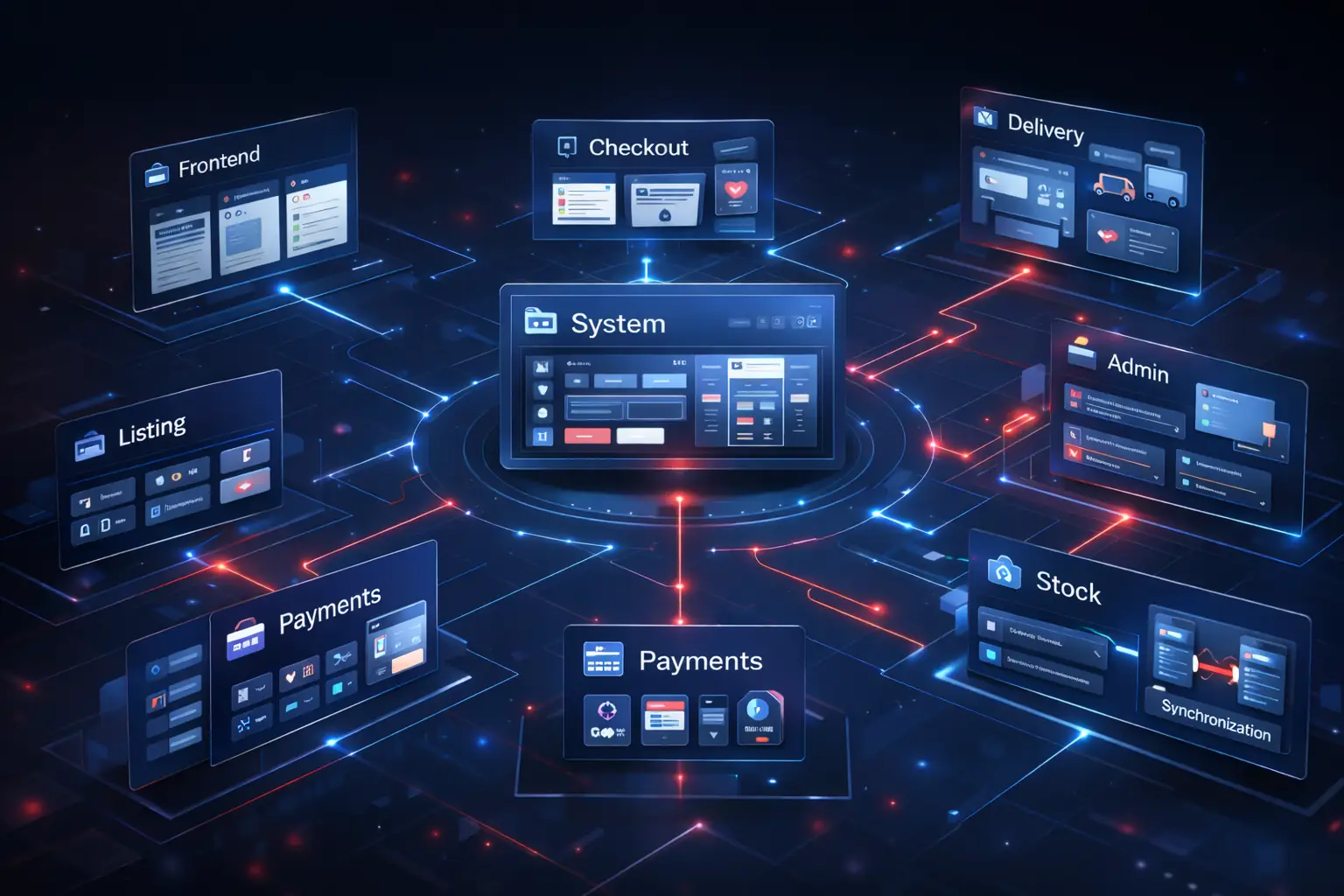
Development, Integrations and Functional Expansion
Once the structure and design path are approved, we move into implementation. At this stage, the project becomes a real working system.
From the front-end perspective:
- Clear navigation
- Practical page layouts
- Easier checkout flow
- Payment and delivery methods
- Information blocks for categories, brands, and product pages
- Contact and feedback forms
- A cleaner user experience overall
From the business and admin side:
- Easier editing of information pages
- Cleaner management of categories, brands, and products
- Practical control over payment and shipping logic
- Order administration
- Product stock handling
- Synchronisation workflows
- A structure that is easier to manage over time
The goal is not to build a complicated system for the sake of features. The goal is to make both the customer side and the admin side more practical.
Product Content and Listing Workflow
This is one of the strongest parts of our process. Many businesses can build a store. Far fewer can build a strong product content workflow that improves presentation, trust, marketplace performance, and long-term scalability.
We offer several ways of working depending on the client's internal process.
Option 1 — Client-Managed Product Entry
The client continues adding products independently in their usual way. This is the simplest and most direct model.
Option 2 — Assisted Product Entry Through Our System
The client uploads product photos and key data through our workflow, such as part number, item condition, brand, model, year, or other available details.
Option 3 — Fully Managed Product Creation
We create the product cards ourselves. In the most basic case, the client only needs to provide the product photos and part number. Additional data improves the final quality even further.
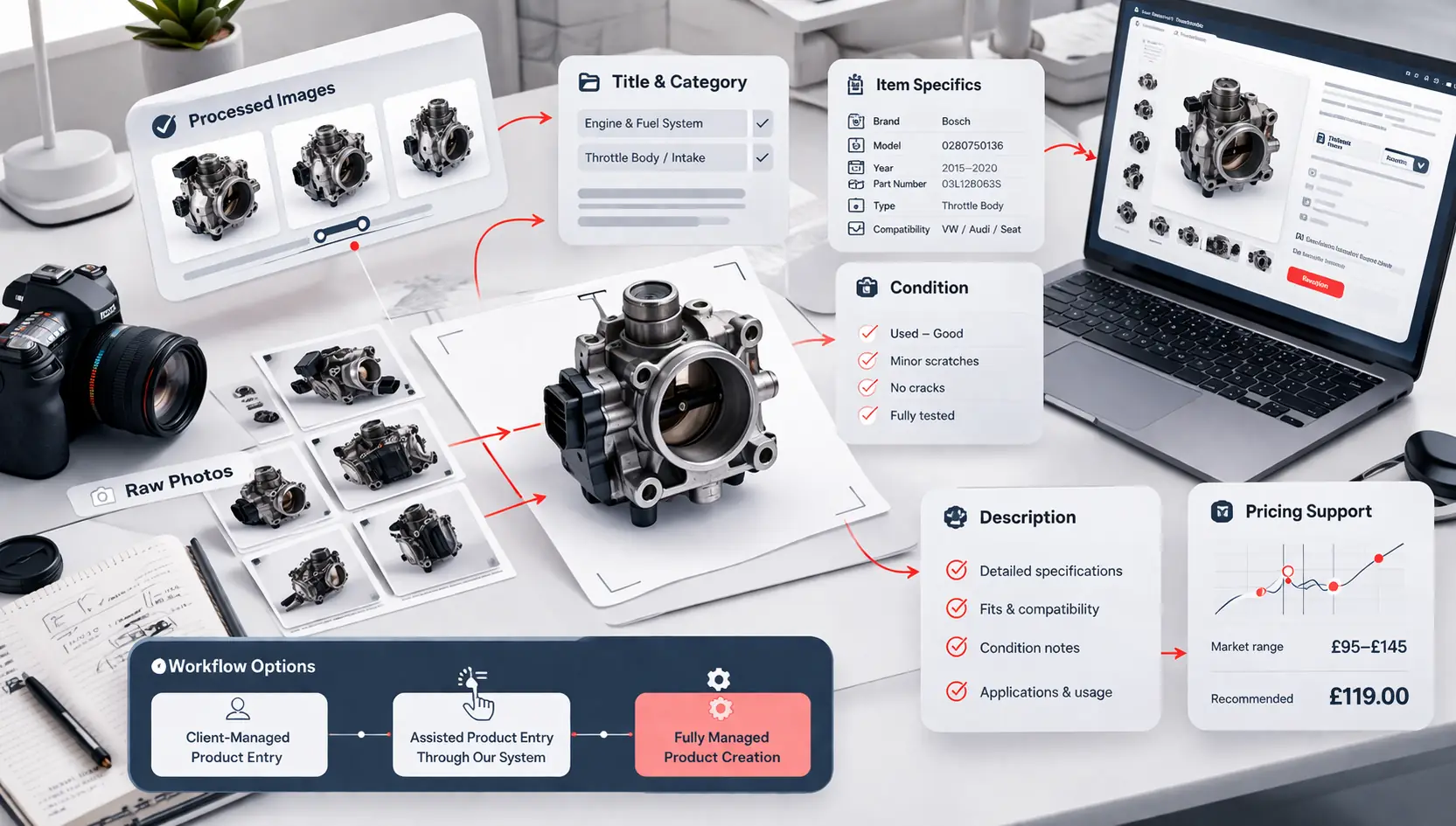
What We Prepare for Each Product
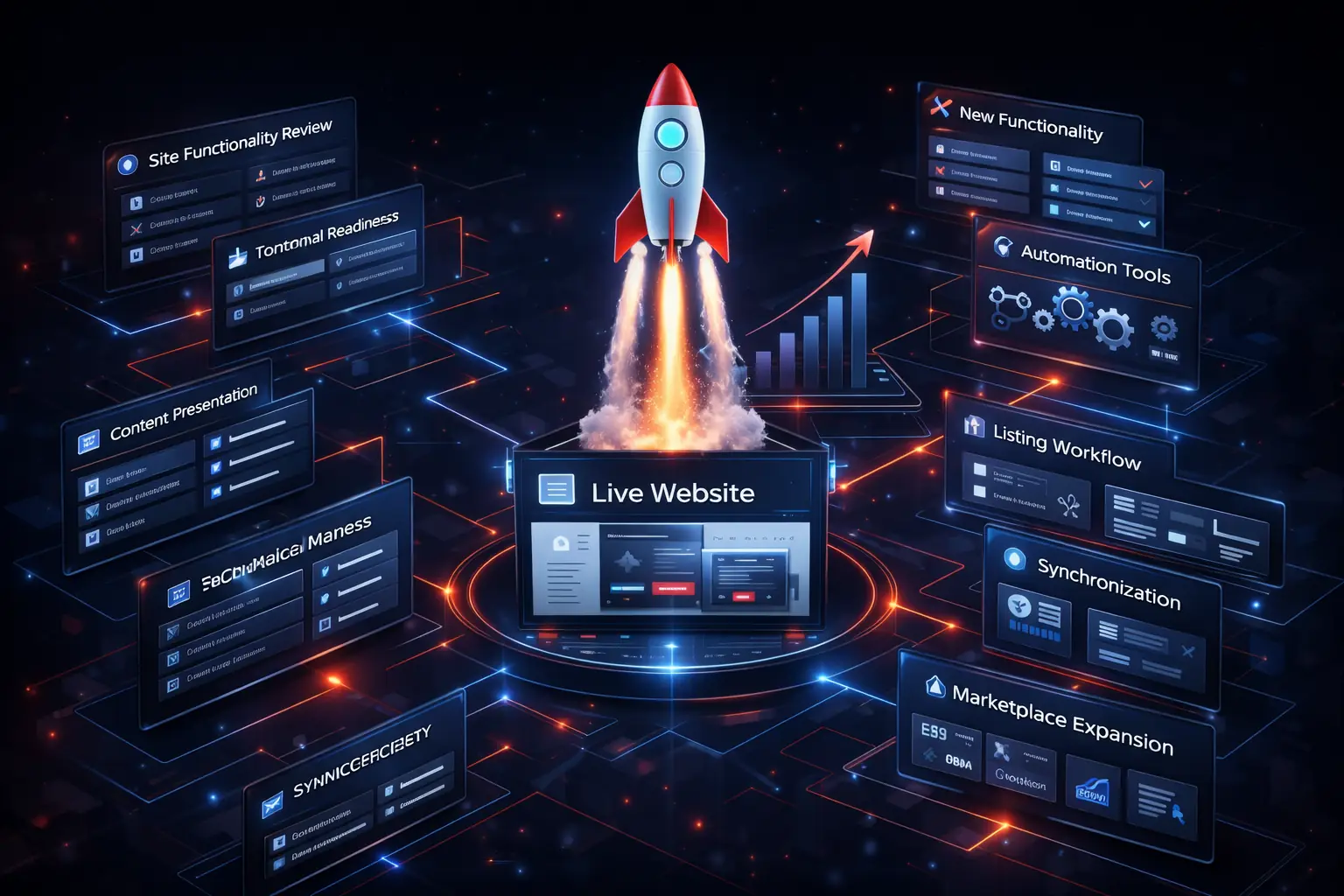
Launch, Support and Long-Term Growth
Once the project is complete, we do not treat it as a finished object that should never evolve. Before launch, we review:
- Site functionality
- Content presentation
- Information accuracy
- User flow
- Technical readiness
After launch, the project can continue to grow based on the client's needs. We can continue supporting the business through:
- New functionality
- Stronger marketplace workflows
- Automation tools
- Product data improvements
- SEO-related enhancements
- Stock and synchronisation improvements
- Features that help the business operate more efficiently
Examples of future development:
- Facebook-related marketplace workflows
- Centralised stock control in one backend
- Multi-channel synchronisation between website, eBay, Ovoko and future platforms
- Automation tools for metadata support
- Unique product data structures that help website pages feel original
Built for Day-to-Day Work, Not Just for Presentation
The purpose of this process is not simply to produce a corporate website or online store that looks modern on launch day.
The real goal is a system that supports:
- Daily work
- Easier administration
- Clearer product presentation
- Stronger usability
- More effective automation
- Future business growth
The website should help it stand out through:
- Better structure
- Clearer information
- Stronger design
- Cleaner usability
- More useful functionality
- Reduced manual work where automation can help
How This Process Supports Different Services
Our process works across multiple service directions:
The structure of the process stays consistent, but the implementation changes depending on the project type, market, language, catalogue complexity, and business goals. This allows us to build projects in a more stable and scalable way rather than treating every task as an isolated one-off job.
Why Work With Quadro Design
We Start with Analysis
Every project begins with competitor research, market review, and business understanding.
We Think in Systems
We do not build isolated pages. We build connected structures for content, products, usability, and workflow.
We Focus on Practical Results
The goal is to improve everyday work, reduce unnecessary manual effort, and support growth.
We Combine Design, Function and Content
Structure, presentation, metadata, product content, automation, and integrations are developed as connected parts of one system.
We Plan for What Comes Next
Launch is only one milestone. The system is designed to be improved over time.
Frequently Asked Questions
Let's Build a Practical System for Your Business
If you want more than a website launch — if you want a system that supports daily operations, growth, and a stronger competitive position — we can help design and build it step by step.