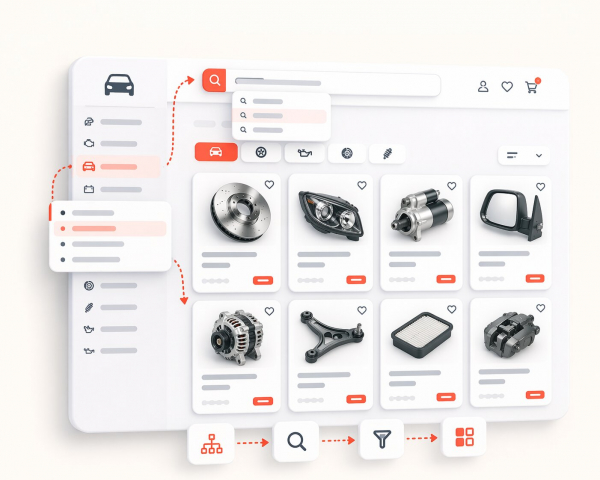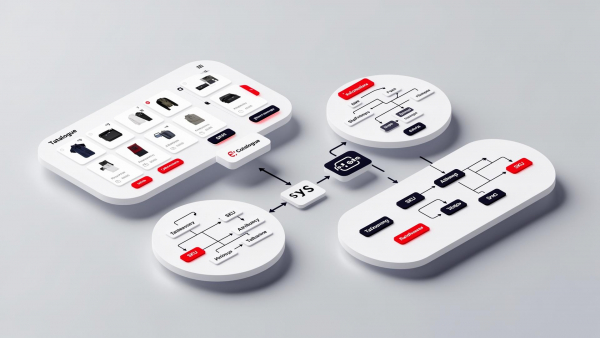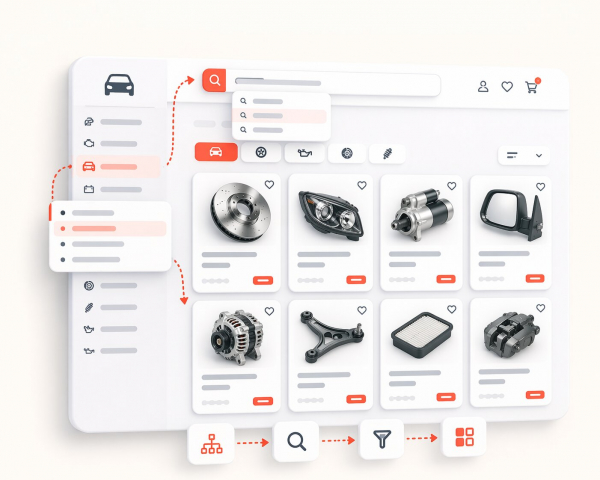
Product Images for eCommerce: Why Clean Visuals and Accurate Details Matter
In eCommerce, product images are not decoration. They are part of the product itself. Before a buyer reads a full description or checks the technical details, the first decision is often visual: does this item look trustworthy, clear, and correctly presented? That is why image quality and...
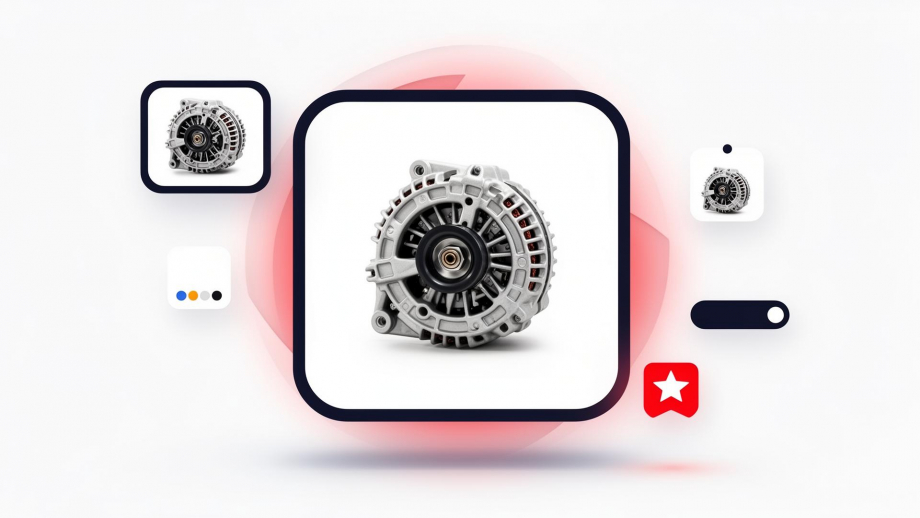
In eCommerce, product images are not decoration. They are part of the product itself. Before a buyer reads a full description or checks the technical details, the first decision is often visual: does this item look trustworthy, clear, and correctly presented? That is why image quality and listing quality should be treated as business assets, not as an afterthought. Google’s Merchant Center documentation makes this very practical. It says image quality is determined by resolution and considers images with more than 1024 pixels to be high resolution. Google also recommends submitting the largest, highest-resolution full-size image available for the product, up to 64 megapixels and 16MB, and says the product should take up roughly 75% to 90% of the image space. This is not just design advice. It is platform guidance on what helps product presentation perform better.
Clean visuals reduce doubt
When product images are weak, buyers start filling in the missing information themselves. They may wonder whether the product is damaged, incomplete, wrongly matched, or simply represented carelessly. That hesitation matters even more in technical categories, used goods, or large catalogues where buyers want confidence before they click deeper.
Google’s Merchant Center help also provides a specific issue type for low image quality, which shows that image problems are treated as real product-data issues, not only as aesthetic imperfections. In other words, image quality affects how the product is evaluated by the platform, not only by the customer.
Better product visuals can support better visibility
Strong images help more than conversion. They can also help how products appear across search surfaces. Google states that when Product structured data is added to product pages, the product information can appear in richer ways in Google Search, including Google Images and Google Lens. Google also says merchant listing experiences can highlight product details such as price, availability, shipping, and return information.
That means the product page works best when visual clarity and structured product information support each other. A product with better imagery, accurate page data, and complete markup has a stronger chance of being understood and presented clearly across Google’s shopping-related surfaces.
Images work best when the rest of the listing is accurate
A clean image alone is not enough. Listing quality depends on the relationship between visuals and product data. If the image looks polished but the attributes are incomplete, the title is inconsistent, or the condition data is unclear, the listing still creates friction. Buyers need the image and the data to confirm the same story.
Google’s product data specification says Google uses this data to match products to the right queries, and that accurate, correctly formatted product data is essential for successful ads and free listings while helping prevent display issues and disapprovals. So listing quality is a combination of image quality and data quality. One without the other is weaker than it should be.
Marketplaces rely on detailed product information too
This is just as true on marketplaces such as eBay. A visually clear listing still needs accurate item specifics so buyers can find it properly. eBay’s Seller Center says item specifics improve visibility in search results, increase the chances of being found on eBay, Google Shopping, and external search results, and help buyers find listings through filters, especially on mobile devices. eBay’s developer documentation also says item specifics help users find an item in search and help prospective buyers quickly learn about the item.
That is why strong listing quality is never just about the photos. It is about combining images with the exact product details that help platforms classify the listing and help buyers refine results.
Consistency matters across large catalogues
The importance of quality becomes even clearer when a business manages many products. A few inconsistent images may look like a small issue in a small store. Across hundreds or thousands of products, they create a weaker catalogue. Some products look polished, others look improvised, and the store feels less reliable overall. The same happens with incomplete or uneven listing details.
That is why consistent visual standards matter. When product images are prepared to the same quality level and product data follows the same structure, the catalogue becomes easier to trust and easier to scale. Google’s Merchant Center image and product-data guidance points in the same direction: quality and consistency make the system easier to understand for both users and platforms.
Clean visuals also make daily operations easier
There is also an operational side to better images. Teams work faster when products follow a repeatable visual standard. It becomes easier to prepare listings, easier to compare versions, and easier to keep the store and marketplaces aligned. The more structured the image workflow is, the less time gets lost on one-off fixes and last-minute corrections.
This idea mirrors how platforms treat structured product information. eBay’s documentation highlights item specifics as a structured way to describe items, while Google’s Merchant Center and structured-data documentation treat images and attributes as core inputs for product presentation. In practice, this means image handling should be part of the same system as naming, attributes, condition notes, and category logic.
Better listing quality supports trust before the click
One of the biggest benefits of better imagery and cleaner listings is that they build confidence before a buyer even contacts the store. Clear presentation reduces uncertainty. It makes the product feel more real, the business feel more careful, and the purchase feel safer.
Google Search Console also highlights that structured data can appear as rich results and can be monitored and improved through Search Console reports. That reinforces the idea that listing quality is measurable and worth improving over time. Good product presentation is not only subjective branding work. It is part of a real, trackable eCommerce system.
Final thought
Product images do more than make a store look better. They help buyers judge trust, help platforms understand products, and support stronger listing quality across search and marketplace environments. When visuals are clean and product details are accurate, the entire catalogue becomes easier to use and easier to believe.
That is why eCommerce businesses should treat image preparation and listing quality as part of the same strategy. Better product visuals, better attributes, and better structure create a stronger store together. And over time, that consistency becomes one of the clearest signs of a professional catalogue.