eBay Fitment Plus Auto in 2026: A Used-Parts Compatibility Audit
Vehicle compatibility is easy to underestimate when selling used parts online. A listing can show the correct brand and a genuine part number yet still leave buyers uncertain about connectors, engine codes, production changes or included accessories. In 2026 that matters especially to UK eBay...
Vehicle compatibility is easy to underestimate when selling used parts online. A listing can show the correct brand and a genuine part number yet still leave buyers uncertain about connectors, engine codes, production changes or included accessories. In 2026 that matters especially to UK eBay sellers: eBay introduced Fitment Plus Auto, which can enhance eligible listings with vehicle-compatibility information. Automation is useful, but it does not turn an unverified part into a verified fit. This guide explains the change and a practical way to prepare product data across an online store, warehouse and marketplace.
What changed on eBay UK in September 2026?
According to eBay UK's official Fitment Plus Auto guide, sellers in eligible fitment-enabled parts categories began automatic enrolment from 15 September 2026. The feature uses a listing's brand and Manufacturer Part Number (MPN) to identify compatible vehicles and add or improve fitment information. It does not apply universally: eBay specifically excludes tyres and wheels from its automatic UK coverage. A seller can opt out or back in through Motors Selling Preferences, currently at account level rather than listing by listing.
The same eBay source says that the feature is designed to complement seller-provided compatibility information, not replace it. It also says that opting out removes compatibility information added by Fitment Plus Auto. These details matter when an integration or internal data audit compares what the seller entered with what a buyer sees. Do not assume that a marketplace-generated match, a manually checked match and an unconfirmed suggestion are interchangeable evidence.
Separate SKU, manufacturer number and OEM reference
An internal stock-keeping unit identifies a specific inventory record. The MPN describes a manufacturer's part identifier. An OEM or OE reference may describe the original equipment reference used by a vehicle manufacturer; alternative manufacturers can have their own cross-references. These values have different jobs. In a used-parts warehouse, two physical units may share a genuine part number yet have separate SKUs because their condition, serial labels, testing results and storage locations differ. Never copy the warehouse identifier into the MPN field merely to fill an empty marketplace attribute.
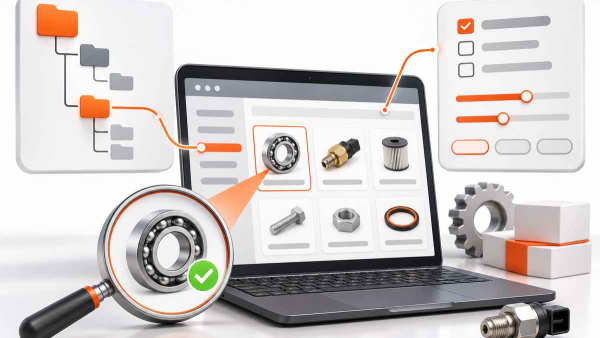
Create a structured record with raw numbers as photographed, normalised numbers for searching, the stated manufacturer, reference type and an evidence source. Preserve meaningful leading zeros, letter suffixes and revision marks. Record cross-references as relationships with a source and review status instead of converting every similar number into an asserted equivalent. A tidy spreadsheet is not proof that cross-references are technically correct.
Look at the part on the shelf, not just the catalogue match
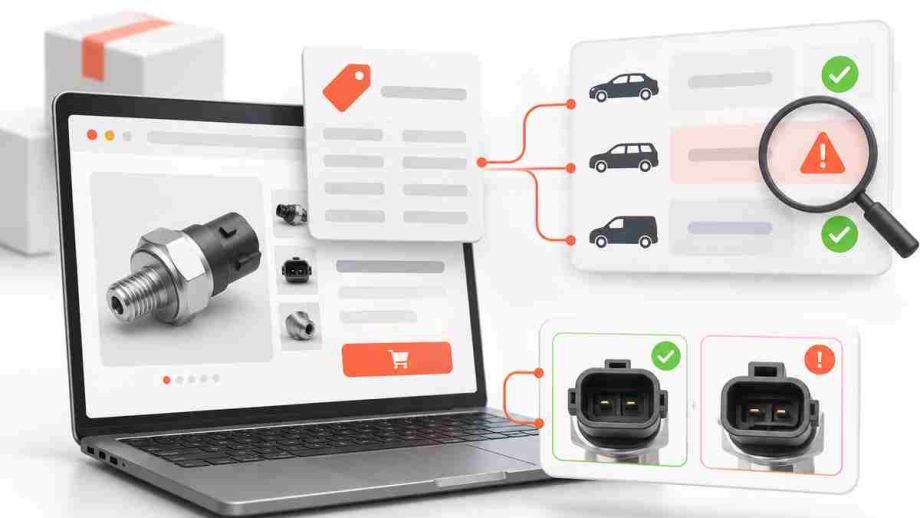
A seller handling a used electrical sensor, for example, should check the physical label, connector shape, pin count, mounting interface and visible damage before making compatibility claims. A photographed two-pin connector might resemble another version but have a different keyway, body orientation or calibration. The listing should explain what the photographs prove and which fitment statements still require confirmation. Where available, compare manufacturer documentation, reliable parts catalogues and confirmed donor-vehicle information rather than relying on a generic internet snippet.
Document whether a donor vehicle was identified by verified records or simply reported by a supplier. A donor's registration, model year or engine designation can help narrow research but does not automatically prove every recipient vehicle fits. Some components require coding or adaptation after installation. Do not imply plug-and-play installation when the exact variant's requirements are unknown.
Design fitment fields for people who edit listings
For an online catalogue, separate product identity from fitment claims. Useful fields can include brand, MPN, OEM cross-references, unit SKU, part type, connector or mounting characteristics, included accessories, tested condition, and a reviewed compatibility table. Give each compatibility row a verification state such as confirmed, pending or rejected, with the source and reviewer. If a particular Shop-Script installation lacks these exact fields, plan a suitable custom implementation or import mapping rather than presenting it as a standard built-in fitment database.
Show only substantiated information to shoppers. It is better to state that a buyer should confirm the exact part number and connector against their existing unit than to advertise dozens of unverified models. Make reference numbers searchable, keep important restrictions visible near the product information and do not hide caveats beneath a purchase button. A mobile customer should be able to inspect the label photo without hunting through a long gallery.
Know where eBay compatibility data can come from
When building integrations, distinguish a seller-maintained record, a marketplace enrichment and an internal draft. eBay's developer guide documents parts-compatibility support through several APIs, including the Inventory, Metadata, Taxonomy and Trading APIs, with support depending on the marketplace and specific category. The Metadata API can determine whether a particular category supports a compatibility model. This is more reliable than hard-coding a category assumption from one product example.
Do not promise that a particular API response exposes every value displayed on the public listing or that an enrichment can be edited in the same way as a seller's own fitment records. Evaluate API permissions and response behaviour in the actual authorised seller account. Keep a snapshot of the locally verified evidence so that a listing remains auditable even if platform enrichment or interface labels change later.
Run a cautious audit after auto-enrolment
Select a small representative sample rather than changing the entire catalogue at once: one part with an exact MPN, one aftermarket alternative with a different brand, one used part with an unclear suffix, one component with several connector variants, and one item in a category where fitment is unsupported. Compare the warehouse label and photos with the Shop-Script record, the seller-authored eBay data and the live marketplace display. Mark every discrepancy explicitly; do not automatically accept the larger compatibility list as better.
Check for category eligibility, missing or misplaced MPNs, incorrect manufacturer names, similar-looking part numbers, false vehicle matches, and previous listing information that might have been superseded. Record the item ID, observed issue, source, responsible reviewer and decision. A simple spreadsheet with a consistent approval process often produces more trustworthy results than a complex automatic rule with no exception log.
Set boundaries for automated listing preparation
Automation is well suited to collecting photos, suggesting titles, preparing categories and transferring verified fields. It should not independently invent OEM cross-references or infer fitment solely from the shape of a component. For low-confidence cases, leave compatibility blank or flagged for human review rather than adding a plausible but unproven vehicle. Keep original images, supplier evidence and final reviewer notes together so corrections can be traced after an order or return.
If the store also sells on other channels, distinguish a shared factual product record from each marketplace's specific compatibility fields. Stock levels and sales statuses may synchronize, but compatibility data needs its own validation and mapping rules. A change to an MPN in the main catalogue should trigger a review before propagating unsupported fitment to several active listings.
Understand the limits of return protection
eBay explains that listings enhanced through Fitment Plus Auto may qualify for eBay Assured Fit in applicable cases. The official programme has eligibility rules and exceptions, and return postage protection is not a universal guarantee against all disputes. Sellers should check the exact current conditions for their category, destination and return reason. A return programme does not remove the operational cost of identifying, picking, packing and inspecting the wrong part.
Track why compatibility-related returns occurred: wrong physical item, incorrect catalogue claim, buyer misidentification, missing connector photo or a fitment field added through automation. Treat those reasons as separate quality signals. Improving the evidence supplied before purchase can be more useful than optimising only the wording of a returns message.
How to decide what to improve first
Start with products where a wrong match would create the greatest customer inconvenience or cost: electronic modules, sensors, safety-related parts and components with many revisions deserve careful checking. Prioritise listings with incomplete identifiers, frequent pre-sale questions or documented fitment-related returns. Measure progress by records reviewed, unresolved claims and corrections made, not by a fabricated sales-uplift estimate. A complete fitment table is useful only if its entries are credible.
Conclusion. Fitment Plus Auto is a meaningful 2026 development, but reliable selling still starts with part identification, proof and disciplined review. Quadro Design can help build structured catalogues through its eCommerce development service and connect reviewed data to sales channels through marketplace integrations. The right starting point is a small sample of actual products and the evidence your team can verify, not a promise of automatic compatibility for every component.